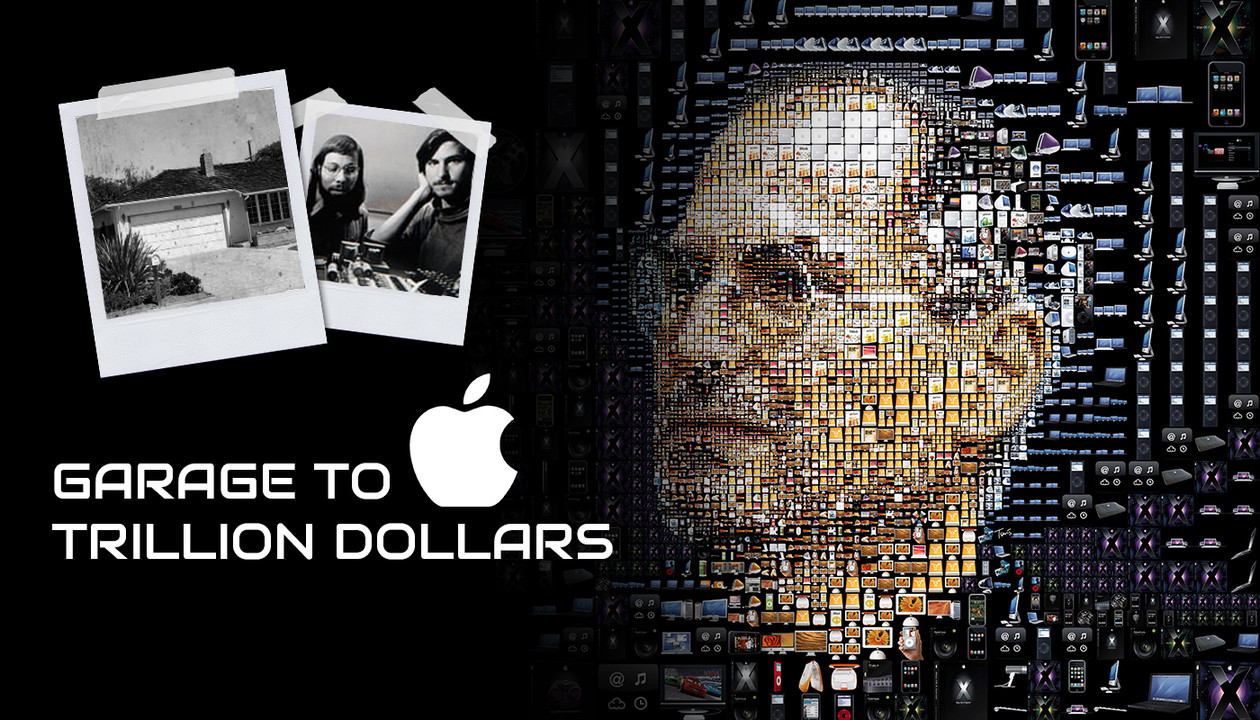
In 1976, two young dreamers, Steve Jobs and Steve Wozniak, sat in a small garage in California
with nothing but a vision and a few circuit boards. They didn’t have millions of dollars, fancy
offices, or a powerful team. What they had was passion, belief, and the courage to think
differently. That small garage would one day give birth to Apple, a company that went on to
change the way the world communicates, works, and even thinks.
But Apple’s journey was never a straight line.
In the early years, their computers were revolutionary, yet not everyone believed in them. Many
saw Jobs and Wozniak as just two guys chasing an impossible dream. Despite this, Apple
slowly began to stand out by focusing on design and user experience things most companies
ignored back then. Their products weren’t just machines; they were statements.
Then came both triumphs and heartbreaks. The Macintosh, launched in 1984, was bold and
futuristic. But soon after, Apple stumbled. Internal conflicts, poor sales, and growing
competition pushed the company to the edge. In fact, in 1997, Apple was so close to bankruptcy
that many thought it wouldn’t survive. Ironically, the man who once got pushed out Steve Jobs
returned to save the company he co-founded.
And he saved it.
With products like the iMac, iPod, iPhone, and iPad, Jobs turned Apple into more than just a
tech company it became a culture, a movement. Apple wasn’t selling gadgets; it was selling a
lifestyle, a way of expressing individuality. People lined up for hours, sometimes days, just to
be the first to hold the latest iPhone.
Of course, Apple had its fears. They feared losing relevance, feared falling behind innovation,
and feared that their next big idea might not connect with people. But they kept pushing
boundaries. Their willingness to take risks, to fail, and to start again became the secret
ingredient of their success.
Today, Apple is one of the most valuable companies in the world. From a tiny garage to a global
empire, the story of Apple is proof that even the biggest dreams can start in the humblest of
places.
But this isn’t just Apple’s story it can be yours too.
Now think about this:
- What dream are you sitting on that feels “too small” right now?
- What’s holding you back from starting, even if it’s just from your own “garage”?
- If Apple could rise after almost failing, why can’t you bounce back from your setbacks?
- How can you start thinking differently in your own journey?
The rise of Apple reminds us that greatness doesn’t come from perfect conditions, it comes
from the courage to begin.