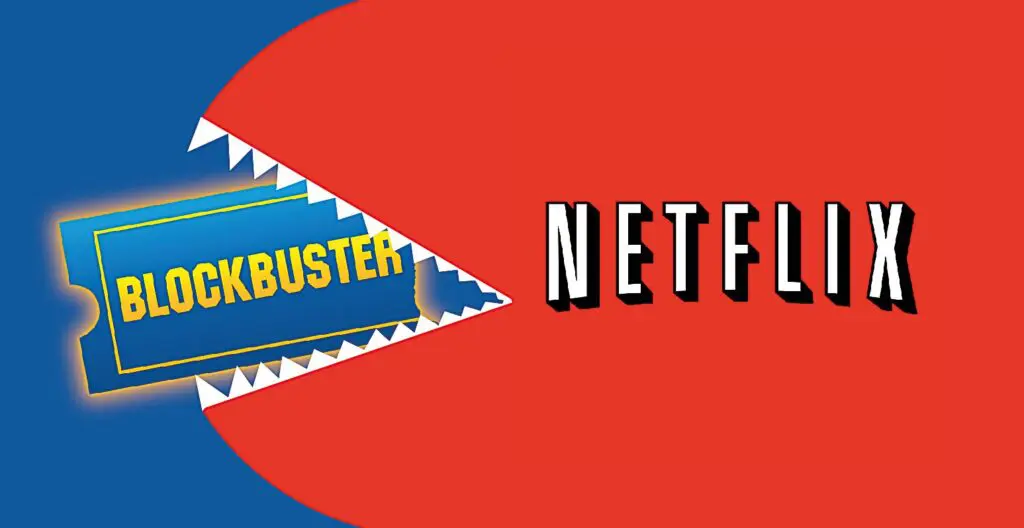
Picture this: it’s the late 1990s. Blockbuster is the king of Friday nights. Families rush to their
local store, scan through shelves of VHS tapes and DVDs, and pick something to watch. At its
peak, Blockbuster had more than 9,000 stores worldwide and was worth billions. Nobody
thought they could fall.
But in a small California office, two entrepreneurs, Reed Hastings and Marc Randolph, were
quietly building something that seemed almost laughable at the time DVDs delivered by mail.
That idea was Netflix.
At first, Blockbuster didn’t even flinch. Who would wait for a DVD to arrive by mail when
you could just walk into a store and rent one instantly? That arrogance cost them everything.
Netflix didn’t stop. They kept evolving. First mail-order rentals. Then a subscription model, no
late fees, unlimited rentals. And then, the real game-changer: streaming. Suddenly, movies and
shows weren’t just in your living room, they were available anytime, anywhere, on any device.
Blockbuster had the chance to buy Netflix in 2000 for just $50 million. They laughed and said
no. A decade later, Blockbuster was bankrupt. Netflix, on the other hand, grew into a global
powerhouse with over 200 million subscribers, producing hit shows, winning awards, and
rewriting the way the world watches entertainment.
But here’s what makes Netflix’s story powerful: they weren’t always sure they’d win. They
faced doubts, failures, and critics at every turn. Still, they kept moving, kept changing, and kept
betting on the future instead of clinging to the past.
And that’s why this story matters to you and me. Netflix wasn’t the biggest, they weren’t the
richest, but they were willing to do what others weren’t – adapting!
Now think about this:
- Are you clinging to an old way of doing things just because it feels safe?
- What small idea do you have right now that others might laugh at?
- If you don’t take risks and adapt, will someone else disrupt you?
- What’s your “streaming moment” that could change your path forever?